





Fire protection services

Passive and active fire protection solutions that safeguard people, property and buildings throughout their lifecycle.

Fire resistance testing

More than a regulatory requirement, fire resistance testing is essential in protecting lives, assets, and business continuity. Our reports help stakeholders make fully informed and cost-effective decisions about remediation priorities, while providing assurance that structural building components will perform as intended in the event of a fire.

Scroll to explore
checkmatefire-fire-resistance-testing-3.webp
EVIDENCE AND ASSURANCE

For many buildings, a lack of complete, accurate, and up-to-date fire safety records can result in unforeseen risks to fire-resisting components.

Whether a building has aged and experienced natural wear, undergone material alterations that no longer meet the original construction intent, or lacks complete fire safety records to support the golden thread, the responsible person is duty bound – under the Regulatory Reform (Fire Safety) Order 2005 (RRFSO), the Building Safety Act 2022, and the Fire Safety Act 2021 – to fill this evidence gap. It is not enough to simply state which materials make up fire-resisting components, including compartment walls, floors, ceilings, and fire doors. To provide defensible assurance of performance, they must be independently verified through rigorous fire resistance testing and proven to be installed and maintained correctly. Furthermore, particularly for complex estates with multi-service penetrations, active and passive fire protection measures should be proven to work effectively together as part of a seamless, connected system.

At Checkmate Fire, we are renowned for our meticulous and methodical approach to fire resistance testing. UK businesses trust us because we do not simply dive straight into intrusive works. Instead, we build a detailed foundational understanding of your building to determine where visual inspections will suffice and where intrusive, opening-up works are genuinely required. Then, we apply expert engineering judgment and rich experience in live, occupied buildings with complex operational needs to ensure assessments are carried out with minimal disruption. Clear digital reports provide you with an evidence-based understanding of test results and compliance recommendations, while specialist guidance and end-to-end support help you prioritise and implement remedial works effectively.

WHERE TESTING ADDS VALUE

Essential assurance throughout the building’s life cycle

Defects in a building’s structural fire-resting components are not always immediately visible and, as a result, can remain undetected until a broader survey takes place. To ensure proportionate fire resistance, services pertaining to inspections and testing help to validate their performance against the building’s unique fire risk assessment – from the earliest stages of construction and installation right through to occupancy and ongoing management.

  • Under the Building Safety Act 2022, higher-risk buildings must pass Gateway Two and Three checkpoints before construction and occupation can take place. Fire resistance testing provides the evidence required by the Building Safety Regulator to confirm structural fire safety performance, helping designers and duty holders demonstrate compliance and avoid costly delays at each critical approval stage.

  • Regulation 38 of the Building Regulations requires fire safety information to be handed over to the responsible person on completion, while Approved Document B sets the baseline performance standards it must evidence. Fire resistance testing closes the gap where documentation is missing or incomplete, later supporting RRFSO compliance and satisfying due diligence during property transactions.

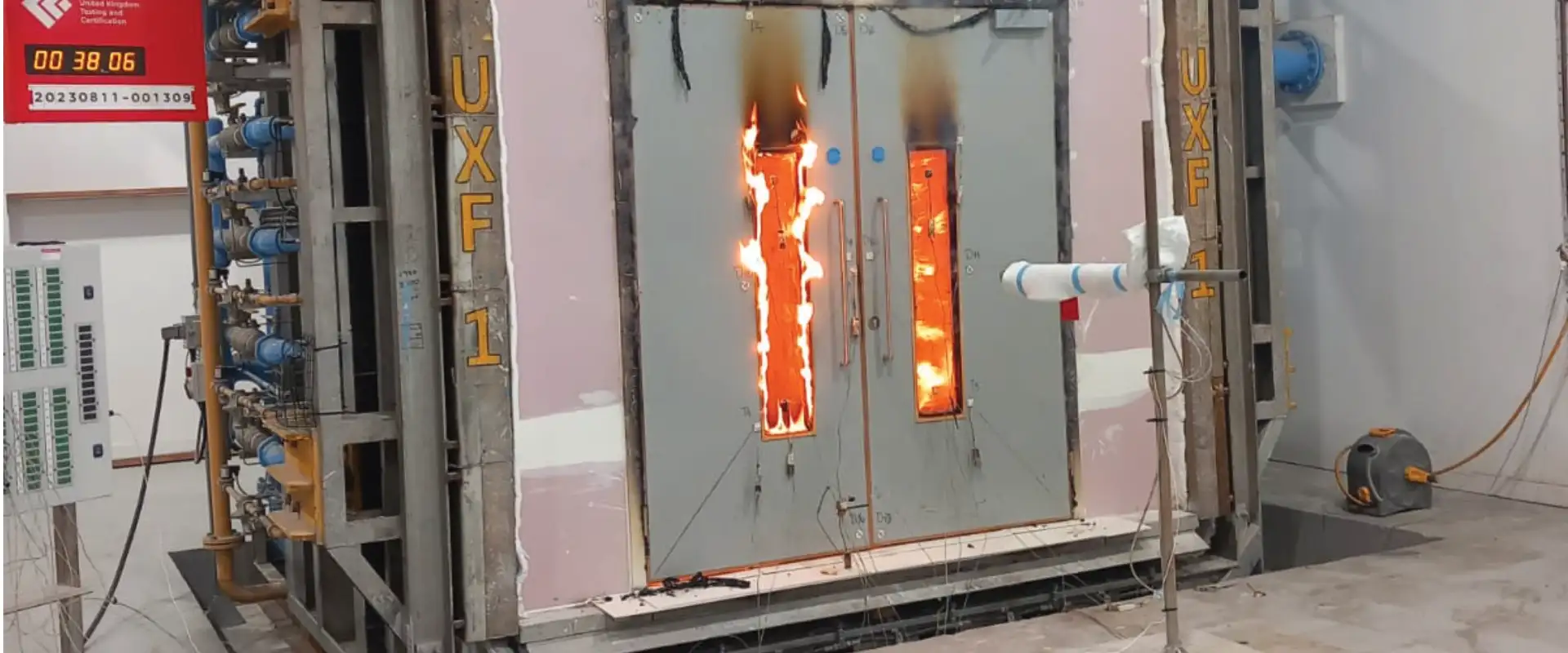
  • Independent fire resistance testing provides certified evidence of how fire doors, compartmentation, and external walls endure intense heat. This physical performance data is essential for completing the comprehensive risk assessments mandated by the RRFSO, and delivers the objective proof required to satisfy safety case reports for higher-risk buildings under the Building Safety Act 2022.

  • Modern buildings often rely on interconnected mechanical, electrical, and plumbing (MEP) services passing through fire-rated structures. Specialist fire resistance testing verifies how these multi-service penetrations and firestopping materials perform together under fire conditions, ensuring integrated systems do not compromise compartmentation and protection remains effective across complex building services.

  • Where service penetrations or construction details fall outside standard firestopping designs and no existing evidence applies, fire resistance testing – supported by expert engineering judgment – determines whether the solution maintains compartment integrity or requires remedial works. This is particularly important within older, refurbished, or architectural complex buildings, such as healthcare and hospitality settings.
  • Verified fire resistance data reduces risk exposure for developers, landlords, and investors, informing decisions around construction, refurbishment, insurance, and asset value. Beyond streamlining property transactions, this can prove useful in prioritising remediation budgets – helping duty holders identify which fire-resisting elements genuinely need upgrading, rather than committing to costly blanket replacement programmes.

OUR APPROACH

A complete fire resistance assessment service

From initial feasibility checks and specimen testing to analysing results and implementing recommendations, we offer a fully joined-up approach to help you ensure fire-resisting components perform exactly as intended in your building.

Pre-test evaluations

Before any fire resistance testing begins, we assess your building’s construction, existing documentation, and fire risk profile to determine feasibility. This foundational review identifies which structural elements require testing, informs the most suitable methodology, and ensures the process remains proportionate and targeted while minimising disruption to occupied spaces.

Preparation guidance

It is vitally important that test specimens accurately represent the construction and materials used within your building. We provide clear, expert guidance at the preparation stage to ensure total alignment, so results are genuinely representative and defensible, giving stakeholders confidence that testing reflects real-world performance and not idealised laboratory conditions.

Specimen installation

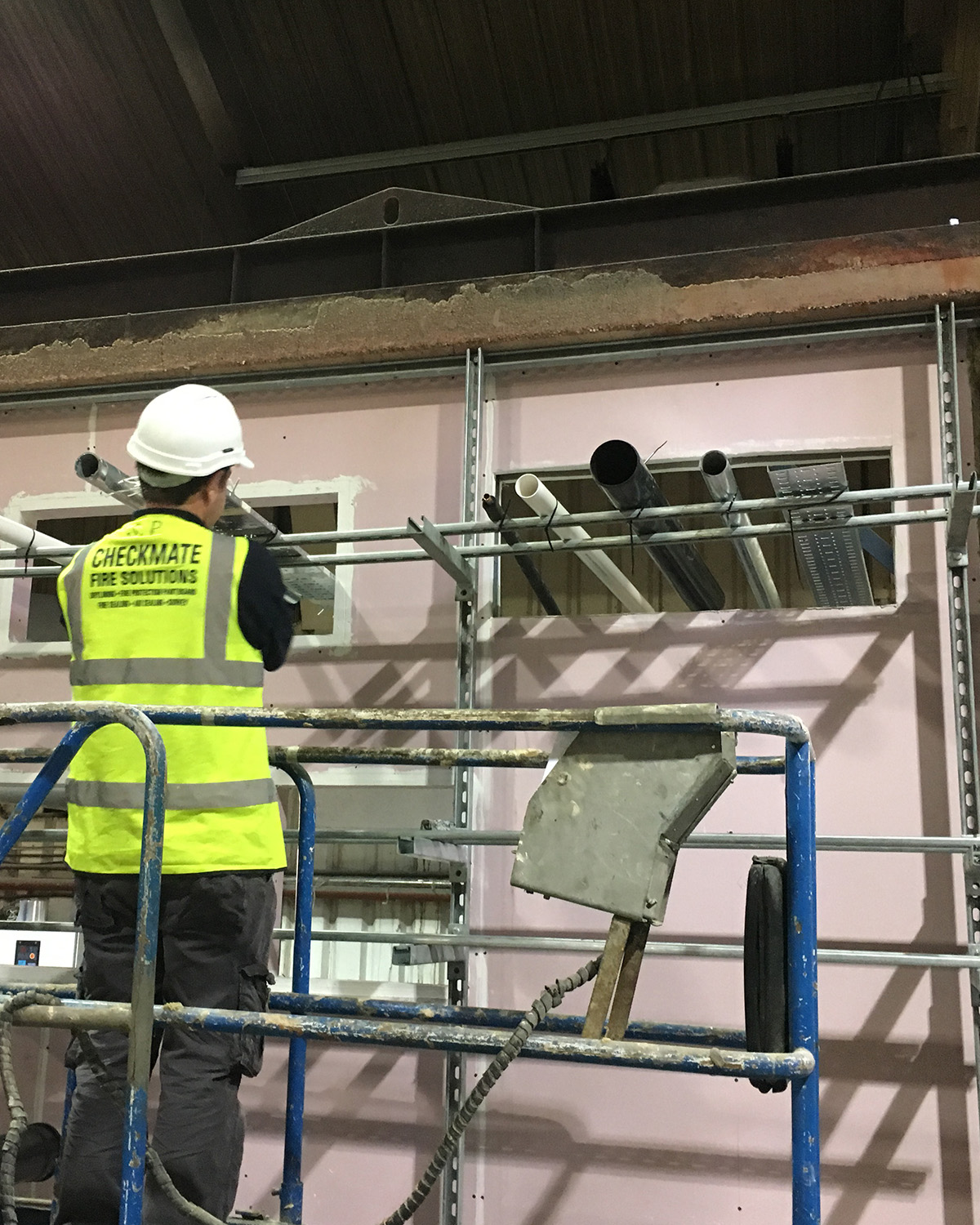
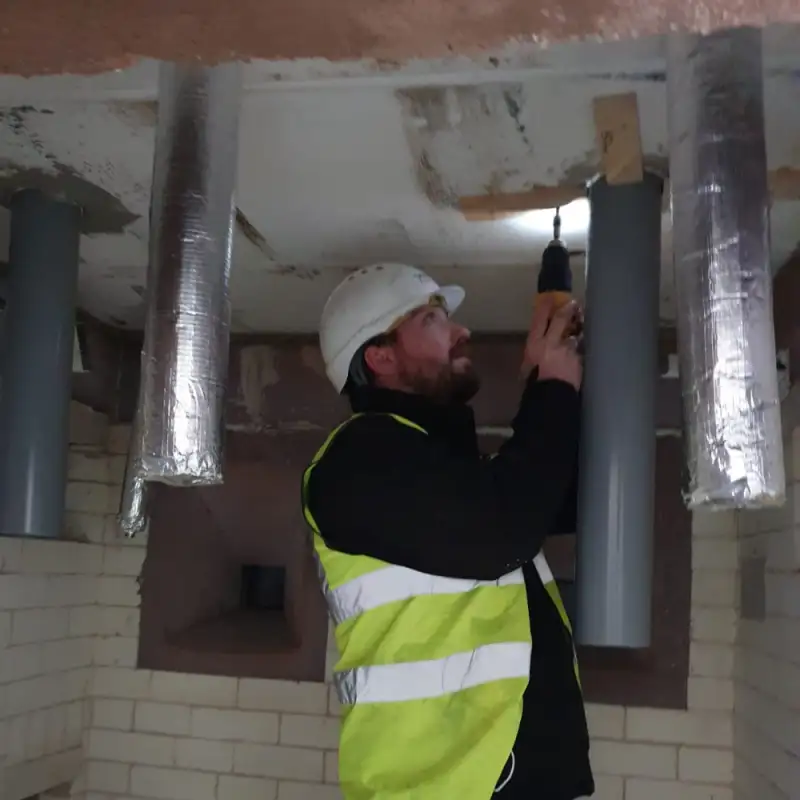
Our specialists oversee the installation of test specimens on site, ensuring they not only mirror the material of the fire-resisting building component in question but also replicate in-situ conditions as closely as possible. In doing so, we safeguard the integrity of the results, providing an accurate reflection of how components will perform when subjected to a real fire scenario.

Specimen submission

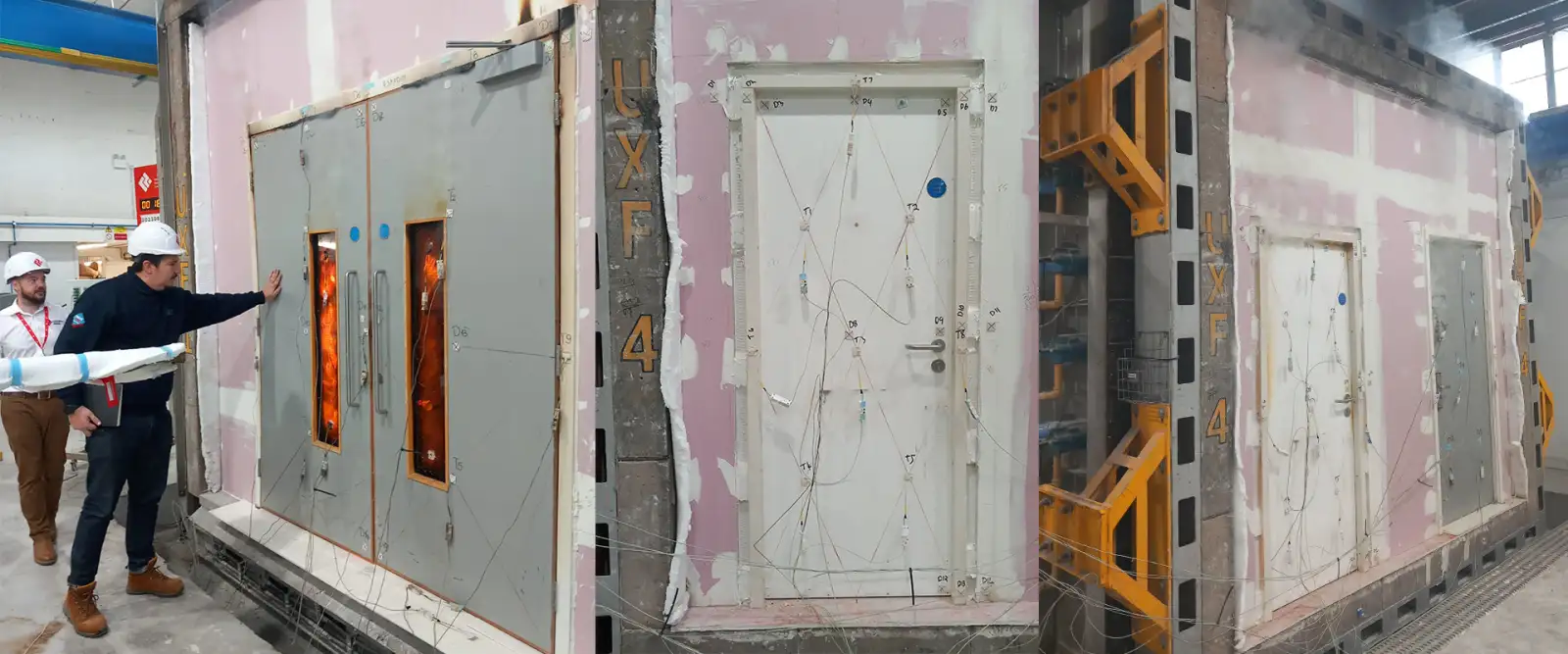
We prepare and submit comprehensive test specifications to accredited laboratories, detailing construction methods, materials, and performance requirements in line with your building’s risk profile. This ensures testing is conducted against the correct standards and parameters, providing a robust evidential basis to support compliance and remediation decisions.

Detailed test analysis

Once testing is complete, we analyse the laboratory results in detail, translating technical data into clear and actionable compliance recommendations. Our reports highlight any performance gaps and explore their significance, before presenting priority-based remedial actions that help duty holders make informed, cost-effective decisions about their building’s fire safety strategy.

Expert implementation

We do not simply hand you a report and leave you to action it alone. Combining technical expertise with trusted engineering judgment, we also work alongside your team to interpret and implement recommendations effectively. Our goal is to make sure test outcomes can be reliably and practically applied to shape lasting improvements in building safety and compliance.

checkmate-fire-fire-resistance-testing-4.webp

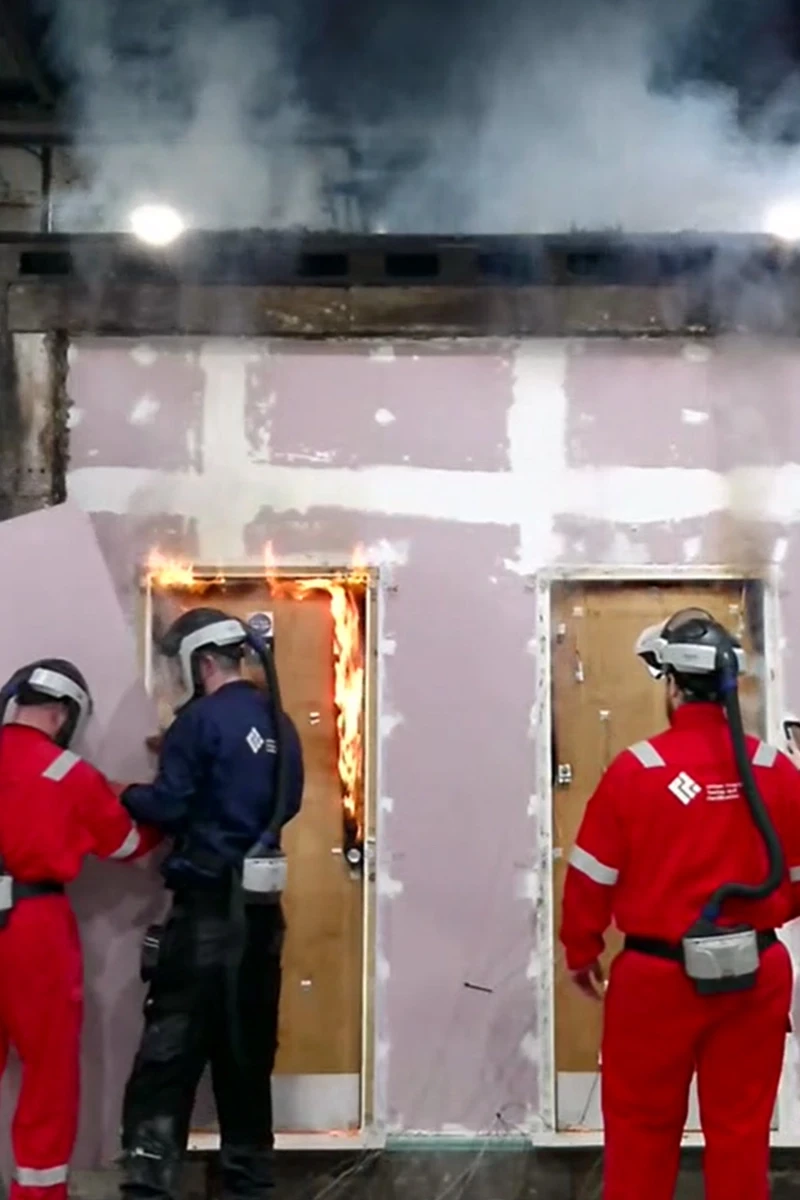
Fire resistance is a core pillar of structural fire safety, providing passive fire protection to contain fire and smoke and, ultimately, buy time for occupants to evacuate and emergency services to respond.

DEMONSTRATING COMPLIANCE

Meeting – and exceeding – rigorous fire safety standards

Approved Document B provides minimum recommended fire resistance in terms of load-bearing capacity, integrity, and insulation for structural building elements, but it does not account for the unique construction, usage, or occupancy patterns of a premises, nor does it guarantee ongoing suitability of fire safety provisions for any material alterations. Furthermore, if documentation is missing or incomplete, duty holders and regulators cannot get a full picture of how a building will truly perform in the event of a fire. As such, expert fire engineering judgment should be applied throughout a building’s life cycle to ensure solutions continue to perform as intended.

At Checkmate Fire, we use current regulations and recognised industry standards as a baseline for fire safety assessments, so you can be confident that the evidence you receive is fully compliant. But we also go further, applying deep technical insight to ensure firestopping measures and compartment walls, floors, and ceilings reflect the practical and operational realities of your environment. Whether visual inspections will suffice or more intrusive tests are required to close gaps in the evidence base, our goal is to make sure your overall fire strategy is robust, proportionate, and defensible under scrutiny.

Industries we work with

Sectors we support

No two buildings face the same fire safety challenges, which is why we tailor our services to the unique risks, regulations, and operational demands of every sector – from healthcare and hospitality to education, residential, and commercial environments.

warning-icon-64x64.svg

Protect your fire safety investment with planned preventative maintenance

Fire safety does not stop once systems have been installed – it is an ongoing responsibility that should never be considered a box-ticking exercise. Our planned preventative maintenance (PPM) programmes provide scheduled inspections, servicing, testing, and repairs to keep your fire protection systems compliant and reliable in the moment they are needed. 

Complete fire safety assurance

We deliver all fire safety services in line with current legislation, guidance, and third-party accreditation standards.

Technical expertise and practical delivery

Combining specialist fire safety knowledge with practical experience, we bridge the gap between strategy and reality to deliver greater certainty, informed investment decisions, and confidence in managing assets.

Nationwide coverage

Our UK-wide network provides consistent expertise wherever your buildings are located, supporting sprawling estates and multi-site portfolios.

An end-to-end service

Bringing together specialist consultancy, inspections, remediation, and installation, we provide a complete view of fire safety – from initial assessment through to long-term assurance and evidence.

Find the right support

Whether you’re looking for a service, sector, resource, or technical guidance, quickly find the expertise and support you need to move forward with confidence.

HOW CAN WE HELP?

Ready to put your building’s fire-resisting components to the test?

By inspecting and testing specific structural components, our fire resistance services help duty holders ensure that design and refurbishment projects incorporate only independently verified solutions, with the evidence needed to satisfy regulatory and insurance requirements.