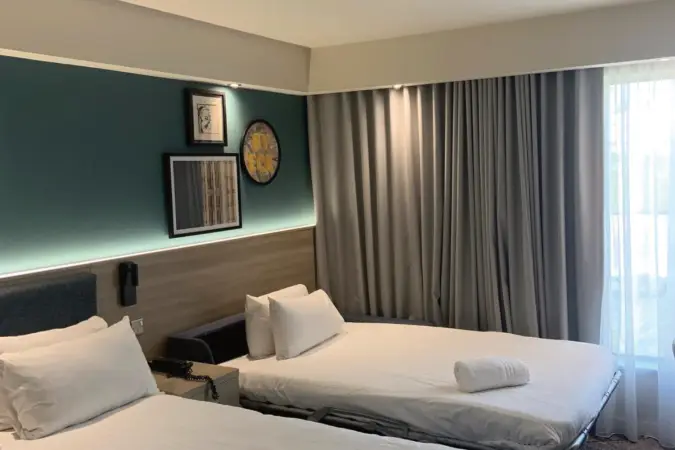
Our sector expertise enables us to deliver tailored fire safety solutions that address the unique challenges of every building and the people who use it.
Driven by quality, expertise and innovation, we provide integrated fire safety solutions that help organisations build safer, more resilient environments.
Student accommodation fire safety has to take into account the realities of high occupancy, shared living, and tight turnaround periods. From university-managed residences to large purpose-built student accommodation (PBSA) portfolios, we combine specialist fire safety expertise with the people, planning, and capacity to deliver these essential works at scale – giving confidence in safe buildings that are compliant and ready for the next intake.
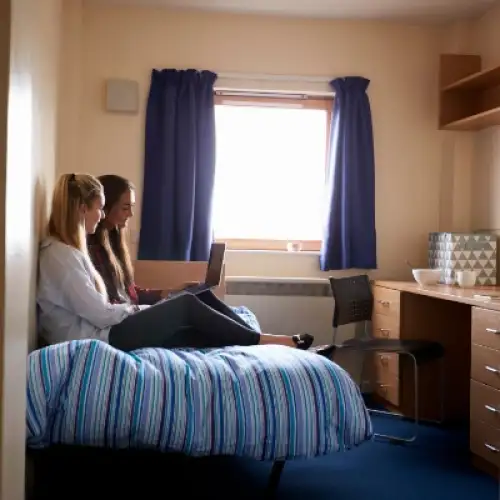
Fire safety in student accommodation has to account for both the building and the way people live in it.
Keeping students safe – and this type of building compliant – begins with understanding how the premises is designed, how it is used every day, and the particular risks that accompany this.
High occupancy, shared facilities, communal escape routes, and the day-to-day behaviour of residents all have to be considered alongside the construction and condition of the building itself.
Fire safety duties for student accommodation are governed by various pieces of legislation, including the Regulatory Reform (Fire Safety) Order and the Fire Safety (England) Regulations 2022, alongside building regulations and guidance like Approved Document B. However, in this often complex landscape, meeting those requirements calls for more than understanding the regulations in isolation. It demands a clear understanding of how fire doors, compartmentation, fire dampers, and other protective measures work together to manage risk in a live building.
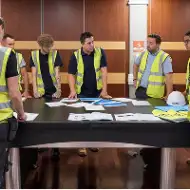
The nature of student accommodation uptake leaves little room for lengthy or disruptive fire safety programmes. Intrusive surveys, fire door remediation, and firestopping works often need to be completed between occupancies, alongside other planned maintenance and refurbishment. This means our careful programming, sufficient resources, and precise coordination are essential to keep work moving and ensure buildings are ready to be occupied.
Planning around occupancy
With student move-in and move-out dates largely fixed, we appreciate that intrusive works need to be planned around the academic calendar. Early surveys and clear prioritisation help identify what needs to happen, where, and when, before the available window begins.
Resource for the workload
Large PBSA portfolios can involve a significant amount of fire doors, compartmentation, and firestopping work across multiple buildings. Having the right people, project management, and our digital dashboard for reporting in place allows programmes to scale – and you stay fully informed – when access becomes available.
Keep the programme moving
We completely understand that various trades, access requirements, and other planned works and budget allocations can create competing demands. We pride ourselves on clear communication, phased delivery, and robust quality checks to ensure intrusive fire safety works progress without compromising the standard of the finished work.
ACTIVE AND PASSIVE FIRE PROTECTION
Detection, containment, and escape working together
In order to prevent fires student accommodation may be at risk of, no single system alone can be relied on. Fire alarms should be installed and maintained to the appropriate standard, helping to detect heat and smoke and alert occupants. Meanwhile, emergency lighting needs to support safe movement when normal lighting fails, and fire extinguishers must be suitably specified and provide a means of tackling certain fires where appropriate. Alongside these active measures, passive fire protection for student accommodation is designed to contain fire and smoke within defined areas and protect escape routes for as long as possible.
However, this protection can be challenged by the way student accommodation is built and used. Service penetrations through floors and walls are common in plant rooms and risers, while pipes and other services can pass through compartment lines into individual rooms and flats. Fire doors in communal areas and bedrooms are also prone to frequent use and damage, making their condition and ongoing maintenance particularly important.
At Checkmate Fire, we are always keen to help our clients understand how these elements interact. A perfectly maintained alarm can provide early warning, for example, but it cannot compensate for a breached compartment. Equally, a well-constructed compartment will not help occupants if the detection systems intended to raise the alarm and warn of fire are not properly maintained. Our approach considers the building as a whole, identifying where protection may have been compromised, specifying appropriate remediation, and maintaining the measures that help keep students safe.
The thinking behind effective fire strategies
Managing tight budgets – our approach in supporting you
Hear directly from our fire engineers and building fire strategy specialists, as they share expert insight on navigating evolving regulations, managing risk, and designing buildings that perform as intended.
Managing tight budgets – our approach in supporting you
Hear directly from our fire engineers and building fire strategy specialists, as they share expert insight on navigating evolving regulations, managing risk, and designing buildings that perform as intended.
Fire strategy: you are not managing this alone
Hear directly from our fire engineers and building fire strategy specialists, as they share expert insight on navigating evolving regulations, managing risk, and designing buildings that perform as intended.
Helping you navigate an ever-changing regulatory landscape
Hear directly from our fire engineers and building fire strategy specialists, as they share expert insight on navigating evolving regulations, managing risk, and designing buildings that perform as intended.
Customer stories
Delivering expertise across 18 university buildings
A vast project for University of Leeds, with more than 750 fire door replacements and 600 remediations delivered across 18 blocks. Find out how Checkmate Fire managed complex fire safety works around academic schedules and heritage buildings.
Working sensitively around listed and heritage buildings, we carefully sequenced works around academic calendars, maintaining fire safety while minimising disruption to students and operations.
Student accommodation is constantly changing – which means fire safety does not simply stop once remedial works are complete.
These buildings are lived in, altered, refurbished, and maintained year after year – and fire doors and other protective measures are exposed to high levels of everyday use. Keeping fire safety on track, and buildings compliant, therefore requires more than identifying defects and completing a programme of remedial works.
From fire risk assessments and detailed compartmentation surveys through to firestopping and fire door remediation and installation, we can support projects from initial investigation through to completion. Our planned preventative maintenance programmes can then provide an ongoing approach to fire door inspection and maintenance, with fixed-term options available over three, five, or seven years.
Each stage of work is supported by our stringent quality and compliance processes, with third-party accredited inspection and installation standards, plus continuous assurance from our in-house compliance team.
We are proud that Checkmate Fire is built on a foundation of continuous improvement – it is a philosophy that is deeply embedded and felt throughout the business. Our third-party accreditations demonstrate more than compliance – they provide independent assurance that our people, processes, and workmanship meet recognised industry standards.
We hold a comprehensive portfolio of industry accreditations covering fire door installation, inspections, surveys, and remediation. They underpin every project we deliver and reflect our commitment to raising standards across the built environment.
Whether you are looking for a service, sector, resource, or technical guidance, quickly find the expertise and support you need to move forward with confidence.
We deliver all fire safety services in line with current legislation, guidance, and third-party accreditation standards.
Technical expertise and practical delivery
Combining specialist fire safety knowledge with practical experience, we bridge the gap between strategy and reality to deliver greater certainty, informed investment decisions, and confidence in managing assets.
Nationwide coverage
Our UK-wide network provides consistent expertise wherever your buildings are located, supporting sprawling estates and multi-site portfolios.
An end-to-end service
Bringing together specialist consultancy, inspections, remediation, and installation, we provide a complete view of fire safety – from initial assessment through to long-term assurance and evidence.
HOW CAN WE HELP?
Managing fire safety across multiple student accommodation buildings?
From surveys and inspections to remedial works and planned maintenance, our specialists are on hand to help you coordinate fire safety works across your portfolio – giving you peace of mind in building safety and compliance.